IPTV Åland 2026: how television really works on the islands
IPTV in Åland: the antenna network got a new concession in June 2026 and channel bundles dropped to two. How to actually watch TV on the islands.
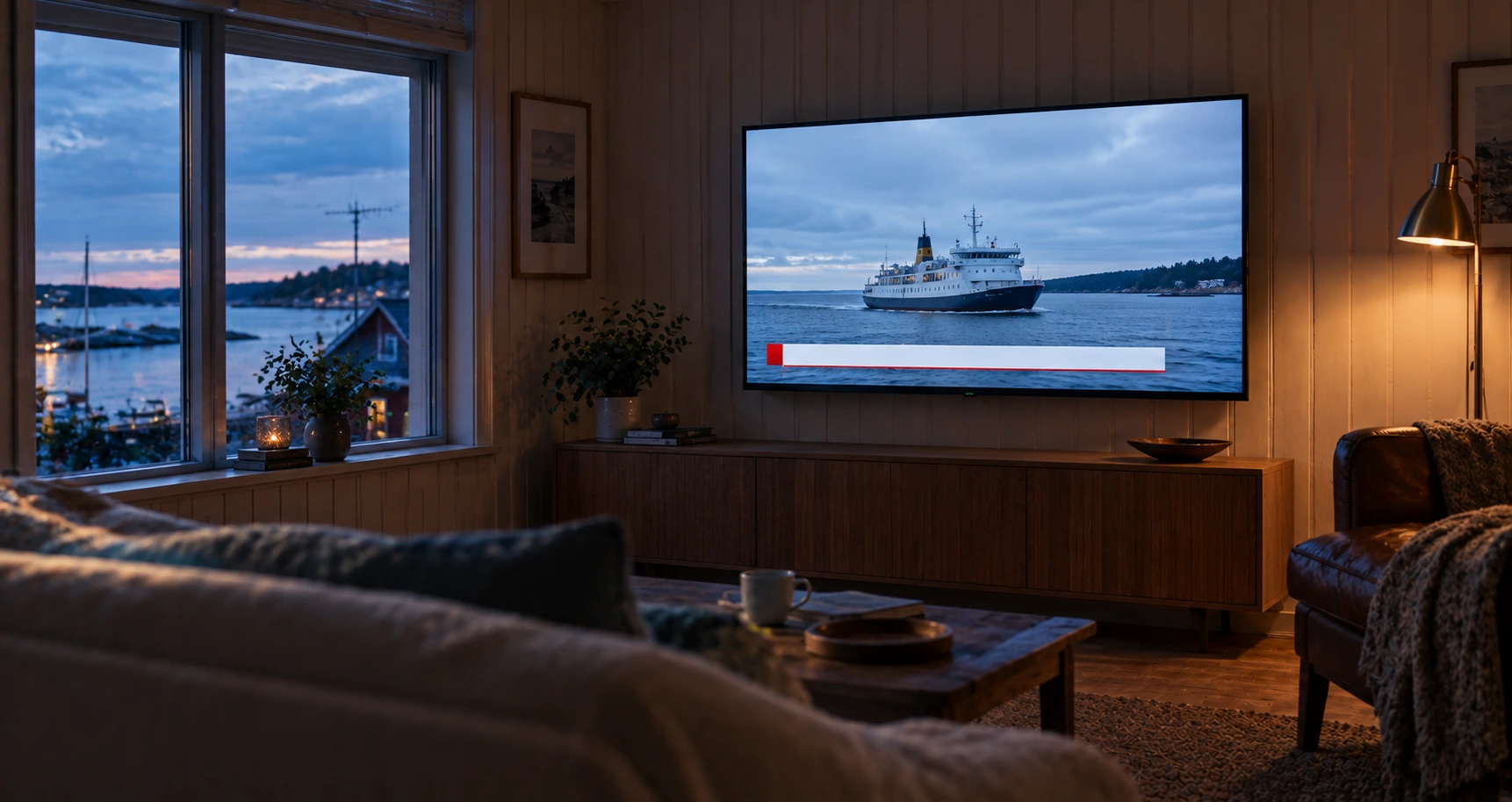
If you have just moved to Åland, television is one of the first things that turns out to work differently than you expected. IPTV in Åland sits in an unusual place: the islands are part of Finland, but for broadcasting they run on their own legislation, their own funding fee and a channel lineup that leans toward Sweden. In June 2026 the archipelago's antenna network was granted a new concession that fixes its shape until 2037 — a good moment to map out what routes to a television actually exist here.
What "IPTV in Åland" actually requires
IPTV means television delivered over an internet connection: channels arrive in an app rather than through an aerial socket. In Åland that definition covers two genuinely different things, and keeping them apart saves a lot of confusion.
The first is operator IPTV, bundled into a broadband contract. It arrives pre-assembled with the local channel base and appears on the same bill as your internet. The second is a credential-based subscription, tied to no operator at all: you enter login details into a player app and it works on any device with a sufficient connection.
A third route is not IPTV but belongs in the picture — the antenna network, which in Åland is organised differently from mainland Finland. That is where the change of summer 2026 landed, and it is worth understanding before committing to anything.
June 2026: a new antenna concession running to 2037
In June 2026 the Finnish Government granted the Åland terrestrial television network concession for the next licence period. It went to Ålands Radio och TV Ab — the only applicant, and the previous holder.
The figures, as reported by Mediamonitori:
| Before | New period | |
|---|---|---|
| Licence period | ended 6.9.2026 | 6.9.2026 → 10.1.2037 |
| Frequency range | 470–694 MHz | 470–614 MHz |
| Channel bundles | 3 | 2 |
| Holder | Ålands Radio och TV Ab | unchanged |
Two details make this matter. The period ends on 10 January 2037, the same day as mainland Finland's next network licence period — but these are two separate decisions, not one shared licence. And the frequency range reserved for television narrowed by roughly a third.
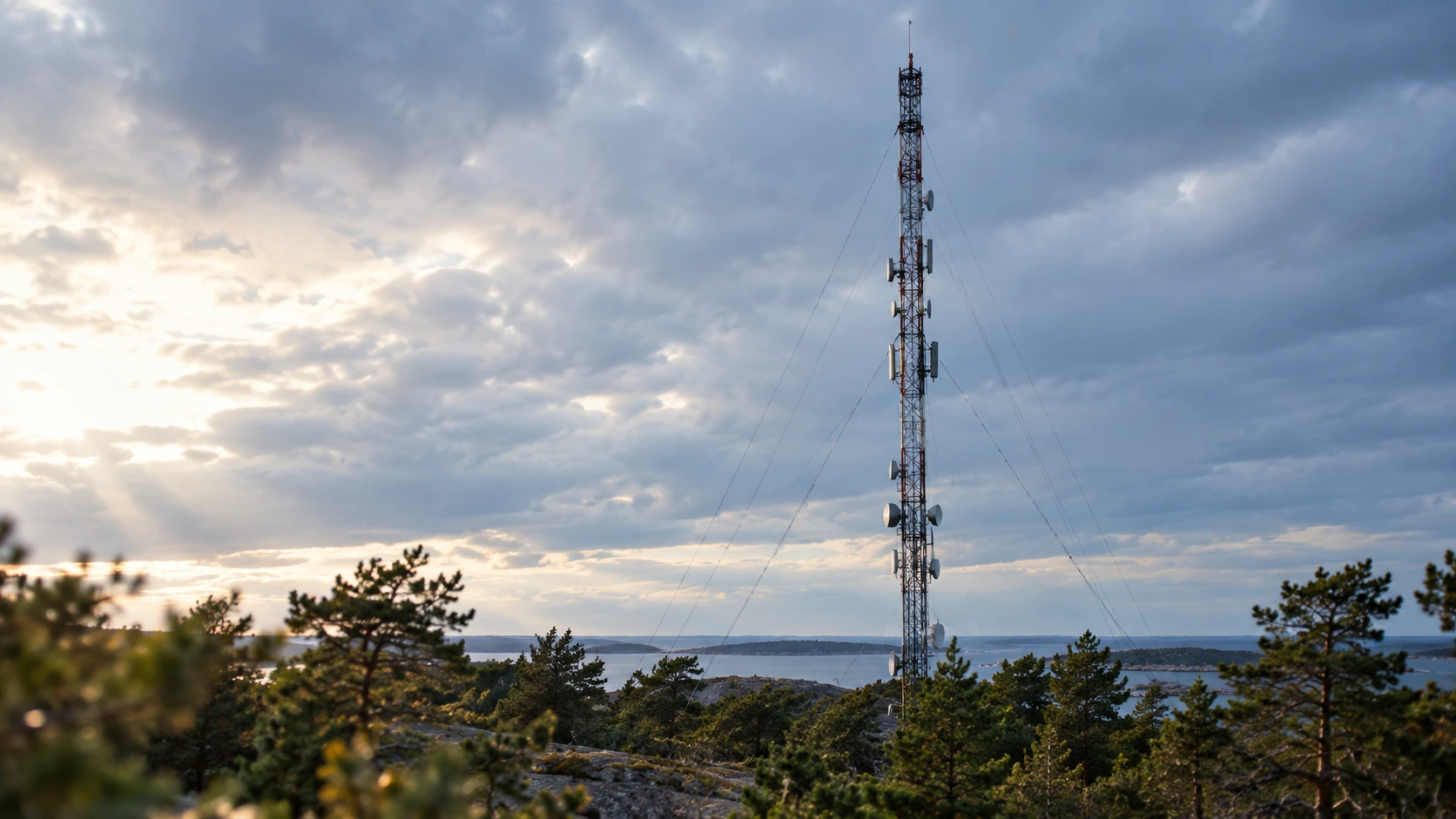
The band narrowed and bundles fell — what that means
Here is the clarification that headlines tend to drop: no broadcasts were lost. Åland's antenna distribution was already operating on two channel bundles within the narrower range, so the regulation described real existing use rather than cutting anything away.
The consequence is forward-looking. With no third bundle held in reserve, the antenna network has less room to grow than before. Adding new channels to terrestrial distribution becomes structurally harder, which pushes future growth toward IP-based delivery — the operator's network, or the open internet.
For a viewer today that means the aerial stays a stable baseline, but any expansion of choice will come from elsewhere. If your needs run wider than the basic channels, the answer is online.
Why Åland is not mainland Finland for television
Åland has roughly 30,950 residents and just under 14,700 households, according to Ålands statistik- och utredningsbyrå. It is a small market, and that is precisely why its television arrangements are built their own way.
Three structural differences from the mainland:
- Its own public service company. Ålands Radio och TV Ab runs the islands' radio and television, and also carries SVT, Sveriges Radio, Swedish TV4 and Yle.
- Its own funding fee. Åland collects no Yle tax. Instead there is a regional media fee of 128 euros a year above an income threshold. The structure, and how it differs from the Yle tax, is covered in detail in our article on Ålcom IPTV.
- A Swedish-language media landscape. Language is the starting point here, not an add-on, and it shapes directly which channels households expect to find.
This is why television guidance written for mainland Finland does not transfer cleanly. The channel base, the funding and the language assumption are all different.
For an international household the asymmetry matters more than the administration. Swedish public broadcasting is part of the baseline here at no extra cost, which is a genuinely unusual arrangement — but English-language channels are not part of it, and no local arrangement changes that. Anything beyond Swedish and Finnish has to come from somewhere else.
Market size feeds into what is on offer, too. Just under 14,700 households is far too small a base for mainland-style commercial channel packages. In practice the selection is whatever the public service company carries plus whatever the local operator has assembled — everything beyond that arrives over the internet. That is the structural reason a credential-based subscription is relatively more interesting here than in a mainland city.
Four routes to a television in Åland
| Route | What it gives | What it ties you to |
|---|---|---|
| Antenna network | basic channels, Swedish and Finnish public service | equipment, not a contract |
| Operator cable TV | local channel base, ready-made | the building and the operator |
| Operator IPTV | wider selection, a single bill | a broadband contract |
| Credential-based IPTV | broad international selection | no fixed term at all |
Ålcom's own channel listing gives a fair picture of the local baseline: the operator's IPTV channel positions run to well over a hundred entries, including SVT 1, SVT 2 and TV 4 alongside Yle 1, Yle 2 and Yle Teema & Fem.
These routes are not mutually exclusive. An aerial and a credential-based subscription coexist in one household perfectly well, and in many homes they cover different jobs — the aerial for news and local output, the subscription for films and international channels.
In the archipelago the connection decides, not the lineup
Åland's population splits across three quite different settings: Mariehamn, the rural municipalities, and the archipelago proper, home to about 1,990 people. That last group is the one most television advice quietly ignores.
Out there the deciding variable is not channel choice but connectivity. A credential-based subscription needs a stable connection, and the thresholds are clear: at least 15 Mbit/s for HD and 25 Mbit/s for smooth 4K. With fixed broadband on an outer island, both are comfortably met.
If the connection instead depends on mobile coverage and shifts with the time of day or the season, the calculation changes. Summer visitor numbers load the network, and an aerial is the steadier baseline then. Buffering is almost always a network problem rather than a service problem, and separating the two is worth doing before switching anything — there is more on that on our devices and setup page.
Three practical points matter out here that a speed test will not show you. Stability beats raw speed: streaming copes badly with a connection that drops out briefly, even when the average throughput looks fine. A short outage interrupts a live channel, while a film keeps playing from its buffer. Direction matters: watching television loads only the download path, so a modest upload figure does no harm — good news on many mobile connections.
And it is room-by-room. Archipelago buildings often have thick walls and more than one floor, and Wi-Fi degrades fast in them. If a speed test gives you 60 Mbit/s beside the router and 8 Mbit/s in the living room, the problem is your home network rather than your subscription line. An Ethernet cable or a single mesh node fixes that more cheaply than upgrading the connection.
Language sets the channel need: Swedish, Finnish or both
Åland is officially Swedish-speaking, and that produces three distinct household profiles.
A Swedish-speaking household expects SVT and TV4 to be there, and the antenna network plus operator packages cover that base. For a wider Swedish selection, our article on Swedish channels goes further into it.
A Finnish-speaking household is in the minority here and notices it in the lineup. Yle's channels are part of the base, but the Finnish-language commercial selection is thinner than on the mainland.
A bilingual or international household — newcomers, seasonal workers, students — usually needs both plus something third. This is where a credential-based subscription differs most clearly from an operator package, because its selection is not scoped to the region's language policy.
What a credential-based subscription adds — and what it does not replace
Nordic IPTV carries 18,000+ live channels, 40,000+ movies and 12,000+ series, and the subscription is credential-based: the same logins work on a television, a phone, a tablet and a computer. Simultaneous streams come from the plan rather than the device — two on the monthly plan, five on the annual one.
Pricing is €15 for one month, €35 for three, €45 for six and €65 for twelve, which works out to about €5.40 a month on the annual plan. There is no fixed term and no auto-renewal. Prices checked 1 Oct 2026. Comparing that against the TV portion of an operator bill is worth doing with your own numbers, and there is a method for it in our IPTV price comparison. Full details sit on the plans page.
What it does not replace: it is no substitute for an aerial when the connection is unreliable, and it does not remove the media fee, which is set by your municipality of residence and income regardless of which services you use. It also carries no specific named sports rights — the selection is broad, but no particular league or competition can be promised in advance.
Setting it up in Åland, step by step
There is nothing island-specific about the setup itself, but doing it in the right order matters, because one step rules out an unnecessary hardware purchase.
- Measure your connection from the room the television is in. A result taken next to the router tells you nothing if the television sits at the other end of the house. In the archipelago a wired Ethernet run is almost always better than Wi-Fi, because it removes a variable entirely.
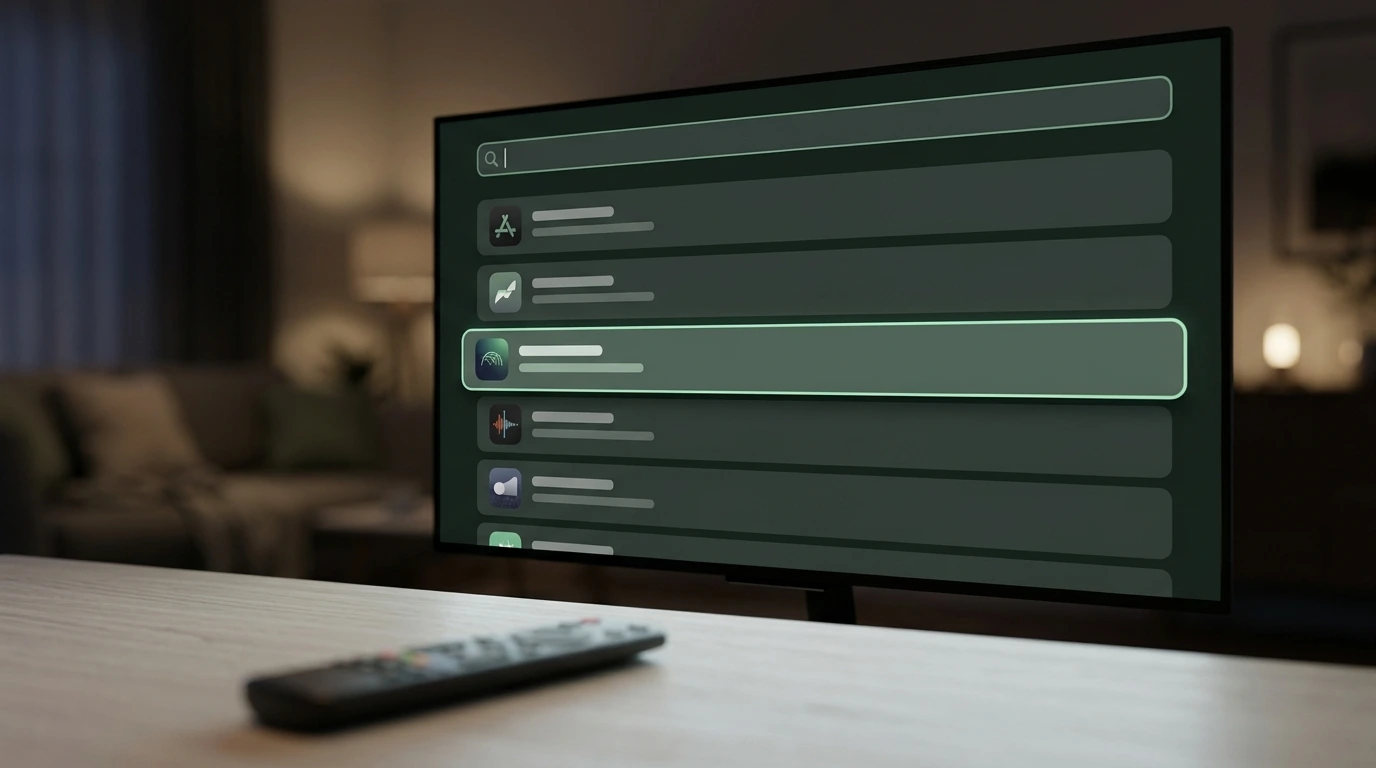
- Open your television's own app store and search for a player by name. On Samsung that store is Apps, on LG it is the LG Content Store, and on Android TV it is Google Play. If a compatible player is there, you need no extra hardware at all.
- Request your credentials and enter them in the app. Activation takes about a minute. Credentials are not tied to a device, so the same subscription also works on a phone and a computer.
- Test live channels first, then on-demand. If a live channel stutters while a film plays flawlessly, the cause is almost certainly connection stability rather than the service.
- Only then decide whether you need a stick. If the television's platform is sluggish or no player appears in its store, a stick settles it for roughly the price of one month's subscription.
If a step stalls, the fastest check is the same credentials on a phone over mobile data. If it plays there, the problem is the television or home network — not the subscription.
New to the islands: what to sort out first
For anyone arriving in Åland, television questions tend to surface in the wrong order. A sensible order looks like this.
- Find out what the building already has. Many housing companies come with cable TV already installed, and it may cover the basic channels without any new contract.
- Check your broadband speed before ordering anything. This determines whether credential-based viewing is a realistic option at all.
- Know about the media fee up front. It is not a choice and not linked to any subscription — it follows your municipality of residence and income.
- Test before committing. Your television's own app platform is often enough without extra hardware, which our article on watching without a box goes through.
For students and seasonal workers the order is the same but the weighting differs: a short stay makes a fixed-term operator contract a poor fit, which leaves a month-by-month subscription as the only genuinely flexible option.
What Nordic IPTV is, and what we don't claim
We are a credential-based streaming service, sold and supported over WhatsApp. We are not an operator, we sell neither broadband nor hardware, and we have no stake in Åland's antenna network or its local cable network.
What we do not claim: we do not claim to replace the public service role of Ålands Radio och TV, and we are not an alternative to the media fee — that is a statutory charge, not a subscription. We also do not promise specific named channels or sports rights, because selections change. And if your archipelago connection is not good enough for stable viewing, we will say so rather than selling you a subscription first.
Unclear cases are worth asking about before ordering. The frequently asked questions cover most of them.
Summary
IPTV in Åland comes down to three parallel routes: the Ålands Radio och TV antenna network, an operator's cable or IPTV package, and a credential-based subscription tied to no operator. They are not mutually exclusive, and most island households end up running a combination of two.
June 2026 added a structural fact worth knowing. The antenna network's new concession period began on 6 September 2026 and runs to 10 January 2037, the frequency range narrowed from 470–694 MHz to 470–614 MHz, and channel bundles fell from three to two. No broadcasts were lost, because distribution already ran on two bundles — but the headroom shrank, and that pushes future growth toward IP-based delivery.
The practical conclusion has three parts. Check what the building already provides, because it may cover the basics. Measure your broadband before ordering, because in the archipelago the connection matters more than the lineup. And keep the media fee separate from any subscription decision, because it follows your residence and income whatever you choose.
To test the service on your own connection before deciding, start with a free trial or see the plans and prices. The wider picture of IPTV in Finland is in the IPTV Finland pillar guide.