Nordic One IPTV 2026: why so many of these names look alike
Nordic One IPTV is not Nordic IPTV. How near-identical names come about — and what a brand name can and cannot tell you about a service.
"Nordic One IPTV" is a search term that regularly lands people on this site, and there is one obvious reason: the name is very close to ours. So this article opens with a disclaimer rather than an introduction.
First, the important part: we are not Nordic One IPTV
We are Nordic IPTV. Nordic One IPTV is a different name belonging to a different operator. We have no ownership stake in it, no contract with it, no reseller relationship and no other connection.
We say this first because the names are close enough that confusion is entirely understandable. If you are specifically looking for that service, you are on the wrong website — and that is better to know now than at the payment screen.
The second thing worth saying immediately: this article makes no claims about that service. We have not tested it, we do not know who operates it, and we do not know what rights its content carries. Any assessment we wrote about a competitor we cannot verify would be invented — and invented reviews are precisely what this industry does not need more of.
What we can do is more useful: explain why so many similar names exist, and what a brand name can tell you at all.
What the search term usually means
There are in practice three different situations behind the search, and they lead to different answers.
Someone is looking for a specific named service. They saw the name somewhere — an advert, a forum, a recommendation — and want to know what it is. For that reader, the relevant fact is that this site is not that service.
Someone is trying to check whether a service is trustworthy. This is the best reason to search, and it deserves a method rather than an opinion.
Someone already subscribed and is looking for support. They have usually arrived in the wrong place because the name resembles another. Here the only correct advice is to find the original payment transaction and work back to the right counterparty. The sender address on a confirmation email usually answers this faster than any search.
A fourth group is smaller but growing: someone comparing two similar names and trying to work out which to buy from. This article deliberately gives no direct answer to that, because the name cannot settle it — but it does give a method for approaching the question from the right side.
The same background applies to all of them, and it is the real substance here: a name is not an identifier.
Why there are so many similar names
The naming in this industry is unusually repetitive, and there is a structural reason. The name is the cheapest part of the whole operation: it can be changed in a week, it requires no licences or investment, and it need not be registered.
The recurring words are always the same. Geography — Nordic, Nordisk, Scandinavian, Suomi. Superiority — One, Pro, Plus, Premium, King, Best. Technology — 4K, Ultra, HD, Smart. Combining those yields hundreds of credible-sounding names that all look about equally convincing in a results page.
The choice is not random either. These words are picked because they are searched for: the name is built around the search term rather than the other way round. So a name tells you mainly what its creator guessed people would search for — not what the service is.
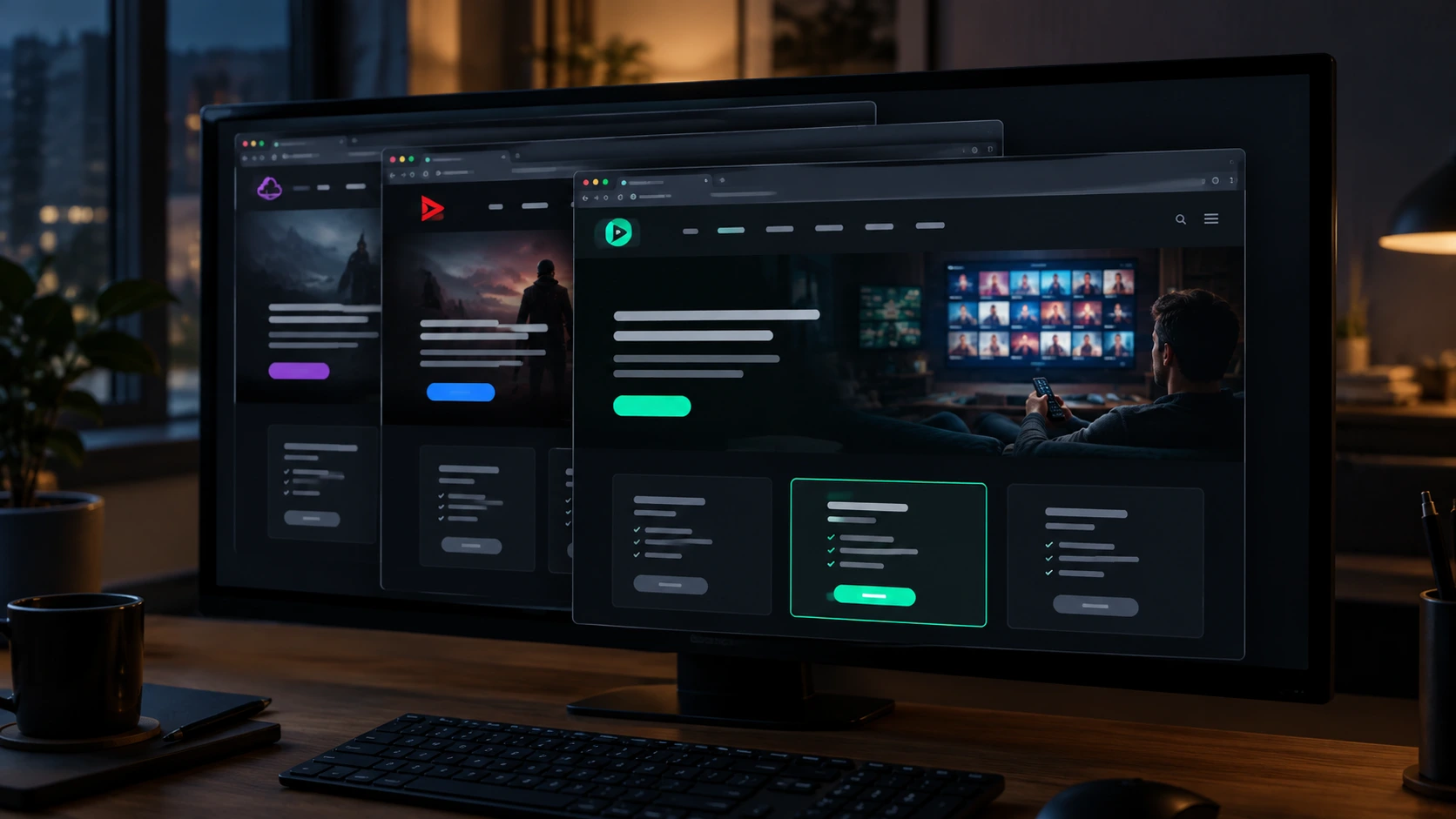
Two consequences are worth understanding. First, the number of names tells you nothing about the number of operators. Ten brands might be one operator or ten, and you cannot see which from outside. Second, changing the name is a routine response to problems, so brand age is not a reliable measure either — a site can be new while the operation is old, or the reverse.
From a search engine's point of view this shows up as several near-identical sites competing for the same term with similarly interchangeable content. For a consumer the result is awkward: the results page does not help you discriminate, because everything looks alike. The discrimination has to happen after you arrive, and then the only useful signals are the three covered below.
The reseller economy: one network, hundreds of brands
This is the mechanism that explains the abundance of names concretely, and there is a documented example from an official source.
According to a TTVK press release published 19 February 2025, an operation across Europe at the end of 2024 dismantled one of the largest unlicensed IPTV networks. The figures describe the structure better than any prose:
| Suspects identified | 102 |
| Arrested during the operation | 11 |
| Local resellers identified | over 560 |
| Users on the service | 22 million |
| Domains taken down | 100 |
| Participating countries | France, Germany, Italy, UK, Switzerland, Sweden |
The number that matters is over 560 local resellers in one network. That means a single wholesale operator can appear to consumers as hundreds of separate brands, each with its own name, website and pricing. The customer believes they are choosing between providers when they are often choosing between sales outlets of the same supplier.
This is exactly why comparing two similar names leads nowhere. The difference may be only the name and the price, not the service. That operation and what it meant for viewers is covered in more depth in our article on IPTV legality, so it is not repeated here.
What "Nordic" in a name does not tell you
A geographic word in a brand name feels informative, but it is not a registered claim and not verified by any authority. Concretely, it does not tell you:
- The company's domicile. A name can contain Nordic with no connection to the Nordics whatsoever.
- Tax status or VAT treatment. Those follow the company's actual location.
- Licences or rights. No name carries information about whether content is properly licensed.
- Which consumer protection applies. That depends on the counterparty, not the brand.
- Who operates the service. The name and the operator are different things, and the latter is what matters.
The same holds for every word in the sector's vocabulary. "Premium" is not a quality grade, "Pro" is not a certification, and "Official" does not mean official. These are marketing words that nobody polices.
A domain suffix is not an identifier either, though it feels like one. A .fi address does not mean a Finnish company in the way many people assume, and it says nothing about who is behind the content. A Finnish-language site on a Finnish domain is easy to build from anywhere, which is precisely why language and suffix are poor criteria.
Presentation is the same story. A tidy site, a clear price list and a working payment button are cheap to produce now and do not discriminate between operators at all. A fully licensed service and a fully unlicensed one can have equally good websites — and often do, because both use the same off-the-shelf templates.
The same logic applies to the recommendation lists these names appear on. Reading those lists is a skill of its own, covered in our article on "best IPTV" lists — in short, a list usually tells you more about its author's incentives than about the services ranked.
Three things you can check behind the name
The name tells you nothing, but three things behind it do. This list is deliberately short, because the subject has its own detailed article.
- An identifiable counterparty. Is there a company whose name, domicile and registration number you can verify in a register? If not, everything else is secondary.
- The payment method and its trail. Where the money goes and what appears on the receipt. Check recurring charges separately.
- The terms before you pay. What is said about cancellation, refunds, and what happens if the service stops.
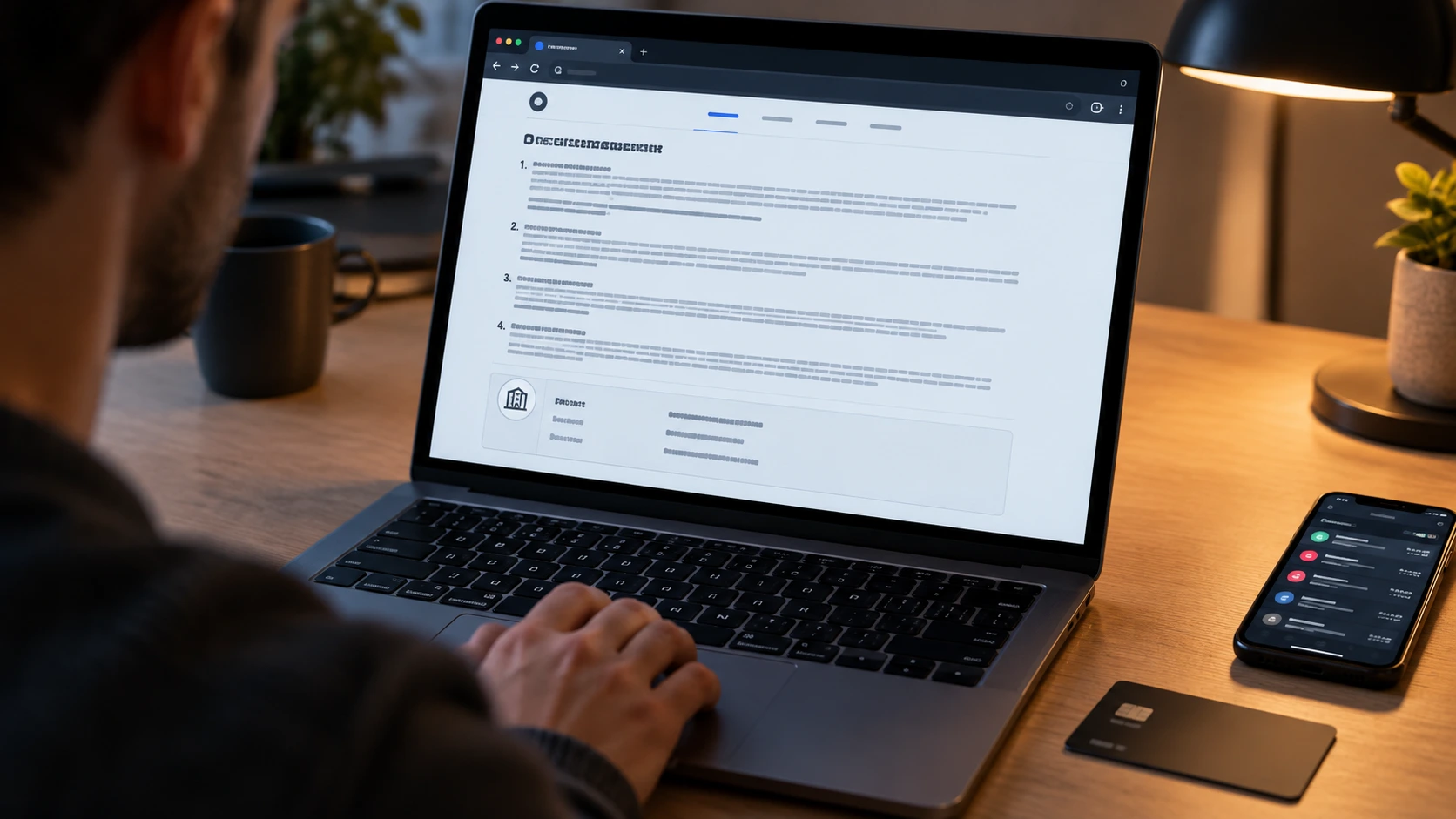
All three are checkable before paying, and none requires technical knowledge. If asking fails to produce one of them, that is itself an answer.
One note on the three. The identifiable counterparty matters most by a wide margin, because it settles every other question after the fact. If you know who you contracted with, you know where a complaint goes, which country's consumer protection applies, and who you can claim a refund from. Without it, no term of service helps, because terms cannot be enforced against nobody.
The terms that matter are the ones people skip: what happens when a service stops, whether a paid period is refunded, and how a subscription ends. Those three separate operators from one another far more clearly than any price or channel count.
In Finland this is not a fringe phenomenon
The scale is worth knowing, because it explains why the names keep multiplying: there is demand.
A TTVK press release from 15 June 2023 cites a Mediavision estimate that around 190,000 Finnish households regularly transfer money to operators of illegal services. That comes from a 2023 release, so it is indicative rather than a current measurement — but it shows the scale is hundreds of thousands of households, not a small fringe.
The same release highlights the role of intermediaries: domain registrars, hosting providers and payment processors. TTVK proposes a "Know Your Business Customer" principle for them, intended to make operating anonymously harder. If that direction holds, it targets exactly what makes swapping brand names easy today.
This is worth reading correctly, because it affects consumers indirectly rather than directly. Enforcement in Finland and the EU has targeted providers, resellers and infrastructure — not domestic viewers. For a consumer the consequence is therefore financial rather than legal: when a network is dismantled or a domain closed, a paid subscription period simply stops, with no refund, because there is no longer a counterparty.
That is what makes an identifiable counterparty so important. It matters not when everything works, but precisely when something goes wrong — and a name with nobody behind it is no help at all in that moment.
If you already subscribed under a similar name
The order matters, because a wrong first move makes the rest harder.
- Find the payment transaction first. A bank or card statement shows which entity actually received the money. That is a more reliable identifier than a brand name.
- Check whether the charge recurs. If it does, establish how it ends — sometimes that requires action on the card side rather than the service side.
- Save the terms. Keep a copy of the terms and your order confirmation, because website content can change.
- Do not assume a similar name is the same entity. We regularly receive support requests about services we have no connection to, and we cannot help with those — not out of evasiveness, but because we have none of their records.
- Only then decide. The risks and their nature are covered in our article on Nordic IPTV brands.
One thing is worth saying plainly, because it gets asked: changing hardware does not fix this. If the problem is who the contract is with, a new stick or a new player changes nothing. Supported devices are listed on our devices page, but that is a separate question from who stands behind a service.
What to compare instead
If the name tells you nothing, what should a comparison rest on? Four things, all checkable before payment and none of them a marketing word.
| What to compare | What it reveals |
|---|---|
| An identifiable company | who the contract is actually with |
| Pricing transparency | whether prices are public and free of hidden lines |
| Commitment | fixed term, auto-renewal, cancellation terms |
| What is promised | promises nobody could keep are the most revealing |
The last is the most interesting, because it works in reverse. The more confidently a service promises "all channels", "100% uptime" or a named competition permanently, the less that promise rests on its own decisions. Broadcasting rights are country-specific and time-limited, and no distributor can guarantee them in advance — so an overpromise is a reliable signal regardless of who makes it.
On price, remember that an unusually low figure proves nothing by itself but does say something about cost structure. If rightsholders are being paid for content, that shows up in the price. If they are not, that shows up too. This is a more useful way to read a price than comparing two numbers, and the method for totalling real costs is in our price comparison.
A name change is not automatically a red flag
For fairness, one counterpoint. A rebrand or a similar-sounding name proves nothing on its own. Companies change names after acquisitions, when expanding into new markets, and because of trademark disputes, and names reaching for Nordic associations are common in this sector for entirely honest reasons too.
What matters is therefore not the name but whether anything behind it can be verified: contact details that answer, pricing that stays the same, and terms written out in full. A name is a signal only when it is the single thing you can discover about a service.
When a brand disappears mid-period
This is asked about after the fact far more often than before it: what happens to the money if a service stops working partway through a paid period.
The practical answer is unwelcome. If there is no identifiable company behind the service, there is also no counterparty to claim against. Consumer advisory services and dispute resolution bodies both require the other party to be identified, and an anonymous domain does not satisfy that. This is precisely the point at which checking the background before paying pays for itself.
One concrete route does exist. Where payment was made by credit card, it may be possible to ask the card issuer to reverse the charge if the service was not delivered as agreed. This depends on the card's terms and the payment method, and the time limits are short — so it is a matter to handle immediately rather than months later. Money sent by direct bank transfer or cryptocurrency is in practice unrecoverable.
From that follows one rule that applies regardless of which service is involved: the longer the period paid in advance, the more the background check is worth. A year paid up front to an unknown brand is a different proposition in risk terms from a single month.
What a legitimate service can tell you that an anonymous one cannot
Rather than listing warning signs, it is more useful to describe what a verifiable service is actually able to do — because these are capabilities, not promises, and an anonymous operation cannot imitate them.
It can tell you what it does not carry. A service that knows its own line-up can say "that competition is not included this season". One that cannot, or will not, answer a direct question about a named competition is telling you something.
Its price is the same everywhere it appears. On the site, in a chat conversation, and at renewal. Pricing that changes depending on who is asking is not pricing.
It describes its terms before payment rather than after. Period length, what happens at the end of it, and what the refund arrangement is.
It answers before you are a customer. Pre-sales responsiveness is the best available predictor of what support looks like when something is wrong.
None of these four requires trusting anyone. Each is checkable in a few minutes, before any money changes hands, and together they separate services far more reliably than a name ever will.
What Nordic IPTV is, and what we don't claim
We are a credential-based streaming service, sold and supported over WhatsApp. We are not an operator, we do not sell hardware, and we are not the same entity as any other service operating under a similar name.
What we do not claim: we do not claim to be the best in the sector, because that is not a verifiable claim — there is a separate article on choosing the best IPTV service. We make no claims about competitors we have not tested. We do not promise named channels or sports rights permanently, because line-ups change. And if you ask us about a service we know nothing about, we will say we do not know.
Plans are €15 for one month, €35 for three, €45 for six and €70 for twelve, about €5.83 a month on the annual plan. There is no fixed term and no auto-renewal, and simultaneous streams run from two to five depending on the plan. Prices checked 14 Oct 2026. The plan details are public, and the frequently asked questions cover the common uncertainties.
Summary
Nordic One IPTV is not Nordic IPTV. We are Nordic IPTV, and we have no ownership, contractual or reseller connection to that name. If that is the service you are looking for, you are on the wrong site — better to know before paying than after.
The abundance of similar names has a structural cause rather than being coincidence. The name is the cheapest and most easily swapped part of this business, and one wholesale network can appear publicly as hundreds of brands: per TTVK, the end-2024 operation identified over 560 local resellers within a single network. Comparing two similar names may therefore not be comparing two services at all.
The practical conclusion is single and simple. A name is not an identifier. Move the assessment off the name and the presentation, and onto three things you can check before paying: whether an identifiable company exists, where the payment goes, and what the terms say. If asking fails to produce one of them, that is itself the answer.
If you want to know more about what we are, we say so openly, and the wider picture of IPTV in Finland is in the IPTV Finland pillar guide. Our own prices and terms can be read on the plans page without contacting anyone, and if you want to try before deciding, start with a free trial.